
Your doctor glanced at the lab sheet, said “your A1C is 5.7, watch your diet,” and moved on to the next thing. You walked out with a number and no plan. That number is not nothing — it is the exact moment the clock started, and the good news is a 3,234-person government study showed you can turn it back.
This post contains affiliate links. We may earn a small commission at no extra cost to you.
This article is for general information only and is not medical advice. Supplements can interact with prescriptions — talk to your doctor or pharmacist before starting anything new.
The short answer: An A1C of 5.7% is the entry point of prediabetes per the American Diabetes Association. The CDC’s lifestyle program — 7% weight loss plus 150 minutes of walking a week — cut the risk of full diabetes by 58% in a randomized trial, and berberine at 1,500 mg a day dropped A1C by 0.5–1.0% across dozens of studies. Here is exactly what the clock looks like and what moves it.
What 5.7% actually means
The ADA uses a three-tier scale: below 5.7% is normal, 5.7% to 6.4% is prediabetes, and 6.5% or higher is type 2 diabetes. So 5.7 is not “almost fine.” It is the first rung of prediabetes.
Here is what most people miss: an A1C of 5.7 means insulin resistance is already underway. Your body is making insulin, but your cells have started ignoring it, so your pancreas pumps out more to keep your blood sugar in range. The NIDDK explains that this process is already quietly damaging blood vessels years before a diabetes diagnosis. “Borderline” undersells it.
How fast does 5.7 become 6.5?
This is the question the doctor never answered, and the top search results rarely do either.
The timeline is real and measurable. Research published in The Lancet in 2025 found that 5–10% of people with prediabetes progress to type 2 diabetes every single year, and roughly 12.5% reach full diabetes within 10 years if nothing changes. Do the math on the high end: at 10% a year, you could cross into diabetes in 7 to 14 years — and that is an average, not a guarantee you have a decade.
But the same body of research shows the opposite is also true. The trajectory is not fixed. People who intervened early didn’t just slow the clock — about a quarter of them turned it back. That is the whole point of acting at 5.7 instead of waiting for 6.5.
The 4 interventions — what the numbers actually show
Here is how the four most-discussed options stack up on the one number that matters.
Checked: June 2026, from the CDC Diabetes Prevention Program and published meta-analyses.
The lifestyle program is the heavyweight — nothing beats losing 7% of your body weight and walking 30 minutes five days a week. But many people want something they can start today while they build those habits.
That is where berberine earns its place. Across about 50 randomized trials, berberine lowered A1C by 0.5 to 1.0%, roughly matching metformin in head-to-head comparisons. The catch is the dose: the studies used 1,500 mg a day, split into three 500 mg doses with meals — not the single low-dose capsule most people grab off the shelf. A standard bottle of berberine supplement 500mg capsules taken three times daily matches the research protocol exactly.
The second supplement worth knowing is magnesium. The NIH Office of Dietary Supplements notes that people with low magnesium tend to have poorer insulin sensitivity, and correcting a deficiency supports healthier blood sugar handling. If you’re among the many older adults running low, magnesium glycinate 400mg capsules is the gentlest, best-absorbed form — the glycinate version won’t send you running to the bathroom the way cheap magnesium oxide does.
Neither supplement replaces the weight-loss and walking piece. They support it. (If sleep is part of your picture too, poor sleep worsens insulin resistance — see our guide on the magnesium form that ends 3am wake-ups.)
Does Medicare pay for the Diabetes Prevention Program?

Yes — and almost no one tells you this. The Medicare Diabetes Prevention Program (MDPP) is covered under Part B for eligible beneficiaries. It’s a structured, year-long version of the exact CDC lifestyle program that produced the 58% result, led by a trained coach, and for qualifying beneficiaries there is no cost to you.
To qualify, you generally need an A1C between 5.7% and 6.4% (yours, at 5.7, is right in range), a Medicare Part B plan, and no prior diabetes diagnosis. You can find a certified in-person or online provider through the CDC’s registry. Ask your doctor to refer you, or search the registry yourself and call to confirm they bill Medicare.
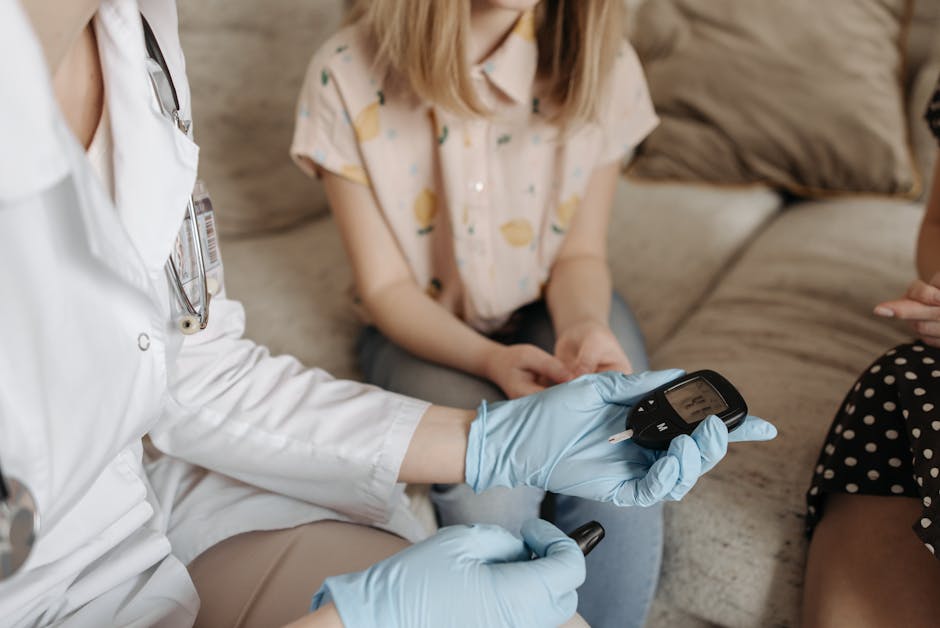
Between your A1C tests, a cheap home blood glucose monitor kit lets you see how your morning numbers respond to what you ate the night before — a quick feedback loop that keeps the habits from sliding.
What to skip
Not everything marketed for blood sugar is worth your money.
- Chromium picolinate. Popular, but the evidence for lowering A1C in people who aren’t severely deficient is weak and inconsistent. Skip it.
- Cinnamon supplements. Sprinkle cinnamon on your oatmeal if you like it, but the pills show tiny, unreliable effects in studies. Not worth a monthly spend.
- Low-dose berberine. A single 500 mg capsule a day won’t do what the trials showed. The research dose is 1,500 mg split across three meals. If you take it, take it right or don’t bother.
FAQ
How long until I should retest my A1C?
Most doctors retest in 3 to 6 months once you start making changes. A1C reflects roughly the last three months of blood sugar, so testing sooner than that won’t show real progress.
Can berberine interact with other medications?
Yes. Berberine can lower blood sugar on its own, so combined with diabetes medication it may push your sugar too low. It can also affect how your body processes certain drugs. Clear it with your pharmacist before starting.
Will supplements alone bring me back below 5.7?
Unlikely on their own. The 58% result came from weight loss and exercise. Supplements like berberine support the number, but the lifestyle moves do the heavy lifting.
Is the Diabetes Prevention Program really free?
For eligible Medicare Part B beneficiaries, the MDPP is covered with no out-of-pocket cost. Many private insurers and the YMCA also offer it low-cost or free. Confirm with your plan.
Should I ask about metformin?
It’s a fair question for your doctor. Metformin cut risk by 31% in the trial — less than lifestyle’s 58%, but still meaningful, especially for younger or heavier patients. That’s a conversation for your doctor, not a supplement decision.

A 5.7 isn’t a verdict — it’s a warning with a fix attached. Start with the walking, add the right dose of berberine, and ask your doctor about that free Medicare program. The clock started, but you still have time to turn it back.