
Home Blood Pressure Monitor After 60: 3 Validated Picks for the Real Number
You sat down, the cuff squeezed, and the number came back 20 points higher than you expected. Now your doctor is talking about a new prescription — and you’re walking out of the exam room unsure whether your blood pressure is really that bad, or whether the room did it to you. If your heart was already racing a little just being there, that hunch may be right.
This post contains affiliate links. We may earn a small commission at no extra cost to you.
Before you accept a new pill based on one office reading, it’s worth measuring at home — properly, with the right device. The number you get sitting quietly in your own kitchen is often the number your doctor actually wants.
On this page
What the 20-Point Gap Actually Means
There’s a name for an office reading that runs high while your true pressure is normal: the white coat effect. The American Heart Association describes white coat hypertension as blood pressure that reads high in a medical setting but sits in a normal range elsewhere — and it’s common enough that guidelines specifically tell doctors to confirm office readings with out-of-office measurements before treating. You can read the AHA’s own explainer on white coat and masked hypertension.
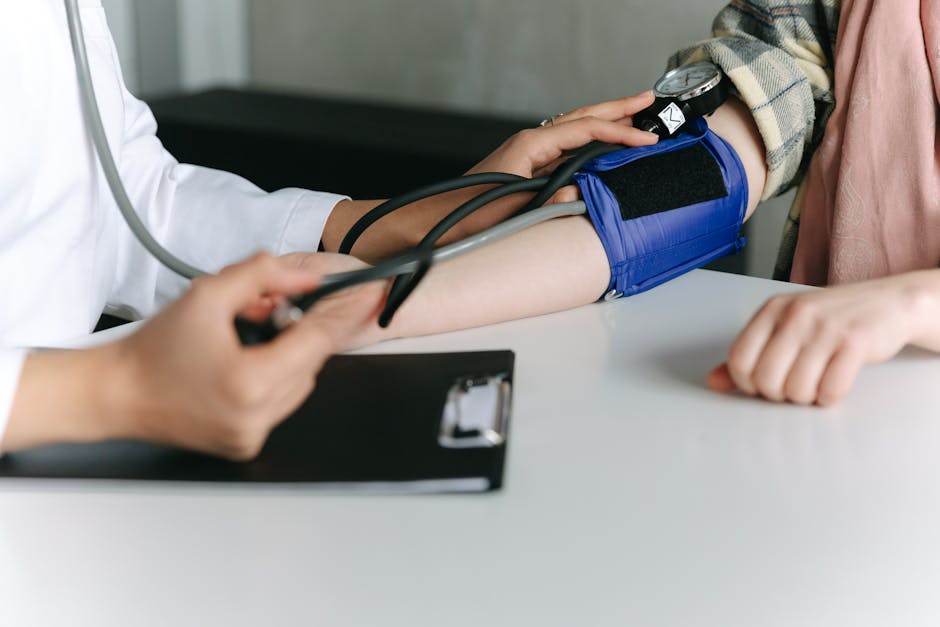
Why is this so common after 60? Arteries stiffen with age, so blood pressure becomes more reactive to stress — and few things are more stressful than an exam room, a rushed appointment, or worry about the number itself. The result is a spike that says more about the moment than about your everyday heart health.
The Quieter Danger: Masked Hypertension
The flip side is sneakier. Masked hypertension is when your office reading looks fine but your pressure runs high the rest of the time — at home, at work, in daily life. It’s the more dangerous of the two precisely because nobody catches it in the clinic. The same AHA resource above notes that masked hypertension goes untreated far too often, which is exactly why it carries real cardiovascular risk.
💡 The whole point of measuring at home isn’t to argue with your doctor — it’s to hand them a fuller picture than a single reading can give. Whatever your home log shows, reassuring or worrying, share it with your doctor and let them decide. Home readings inform the conversation; they don’t replace it.
How to Measure at Home So the Number Is Actually Reliable
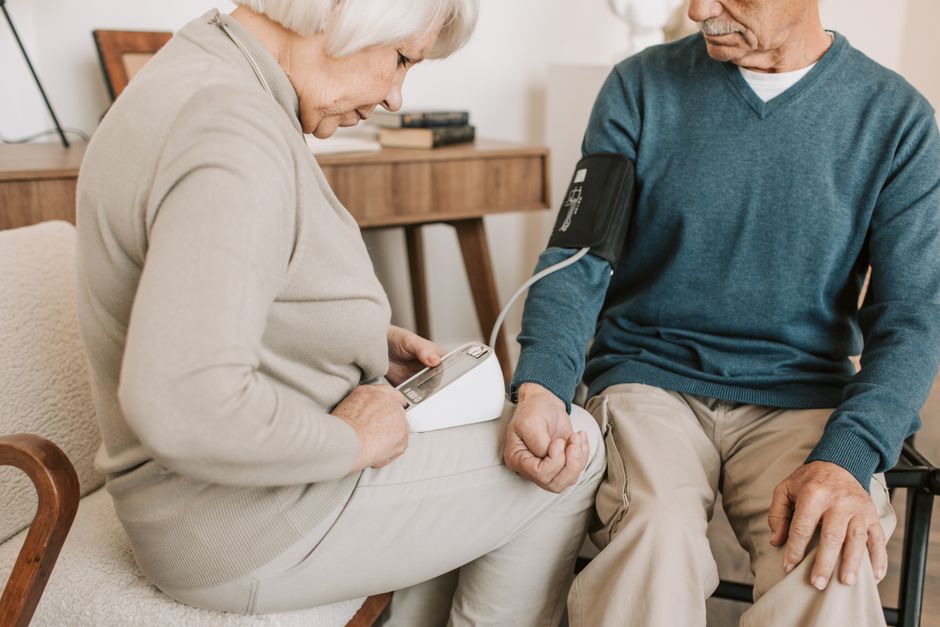
A home monitor only helps if you use it right — bad technique is the number-one reason home readings mislead people. The American Heart Association’s home monitoring guidance lays out the checklist:
- ✅ Rest 5 quiet minutes before you start — no talking, no phone.
- ✅ Sit with your back supported, feet flat, arm resting on a table at heart level.
- ✅ Cuff on bare skin, not over a sleeve.
- ✅ Take 2–3 readings a minute apart and average them.
- ✅ Measure at the same times each day, ideally morning and evening.
- ✅ Empty your bladder first and skip caffeine and cigarettes for 30 minutes.
One more thing that matters as much as technique: the device. Skip wrist and finger monitors — they’re notoriously position-sensitive and unreliable. Use a validated upper-arm monitor, the kind doctors use. A good default here is the Omron 3 Series upper arm blood pressure monitor, which is affordable and validated; more on it below. You can confirm any monitor’s status at validatebp.org, the U.S. Blood Pressure Validated Device Listing.
⚠️ Remember too that at home, the threshold is lower: a home reading under 135/85 mmHg is generally considered normal, versus the clinic’s 140/90. If stress or poor sleep is driving your daytime numbers, our guide on magnesium for better sleep after 60 is worth a look too, since rest and blood pressure are closely linked.
The 3 Monitors Worth Buying
Omron 3 Series — the reliable default
Omron is the brand most doctors point to, and the 3 Series is its no-frills validated workhorse. It stores your last several readings, flags an irregular heartbeat, and uses a standard adult cuff that fits most arms (check the listed cuff range — usually about 9 to 17 inches). If you want one monitor that just works and won’t confuse anyone in the house, this is it: the Omron 3 Series upper arm blood pressure monitor.
A&D Medical UA-651 — big display, clinical accuracy
A&D makes monitors used in actual research settings, and the UA-651 brings that accuracy home. It has a large, high-contrast screen that’s easy to read for tired eyes, a fast one-button operation, and irregular-heartbeat detection. If you or a parent find small displays frustrating, the A&D Medical UA-651 upper arm blood pressure monitor is the friendliest to read.
Greater Goods Upper Arm Monitor — value with a backlit screen
If you want a validated upper-arm monitor without paying premium-brand prices, the Greater Goods pick delivers. It has a backlit display (helpful in dim morning light), stores readings for two users, and comes with a comfortable standard cuff. It’s a solid choice for a second monitor or a fixed budget: the Greater Goods upper arm blood pressure monitor.
Quick comparison
For most people, the Omron 3 Series is the pick — but if you’ll be sharing the monitor across two people and want easy setup, the value option below holds its own.
What to Skip
- 🚫 Wrist and finger monitors. They’re convenient but position-sensitive; a slight tilt throws the reading off. Doctors don’t trust them, and neither should you.
- 🚫 Ultra-cheap generic monitors with no brand history and no validation listing. If you can’t find it on validatebp.org, don’t rely on it for a medical decision.
- 🚫 Any device that doesn’t list a cuff size range. A cuff that’s too small reads falsely high — one of the most common causes of a bad home number. Measure around your bare upper arm and match it to the listed range before you buy.
Frequently Asked Questions
How often should I measure?
When you’re first building a picture, measure morning and evening for a week and bring the log to your doctor. Once things are stable, a few days a month is usually enough — follow your doctor’s advice.
Which arm should I use?
Use the same arm each time. Many people run slightly different in each arm; pick one (often the higher-reading arm) and stay consistent so your log is comparable.
Does caffeine really affect the reading?
Yes — caffeine and nicotine can temporarily raise blood pressure, which is why the AHA advises waiting 30 minutes after either before you measure.
When should I call my doctor?
Share any consistent pattern of high home readings, and seek care promptly for a single very high reading (for example, 180/120 or above) especially with symptoms like chest pain, shortness of breath, or vision changes.
Should I bring my monitor to appointments?
It’s a great idea — your doctor can check it against their equipment so you both trust the numbers it produces. Bring your log too.
This article is for general information only and is not medical advice. Supplements and medical devices can interact with prescriptions and conditions — talk to your doctor or pharmacist before starting anything new, and never stop or change a prescription on your own.

Don’t let one nervous number in an exam room push you into a decision you’re not ready for. Measure it right at home, keep a log, and bring the real story to your next appointment.